
*I get commissions for purchases made through affiliate links in this post at no extra cost to you. I do not promote anything I haven’t validated or personally used myself.
Alocasia plants captivate indoor gardeners with their dramatic arrow-shaped leaves and tropical appearance, but these stunning houseplants require specific care to flourish. These fast-growing tropical plants thrive in bright indirect light, consistently moist soil, and high humidity environments of 60% or higher.
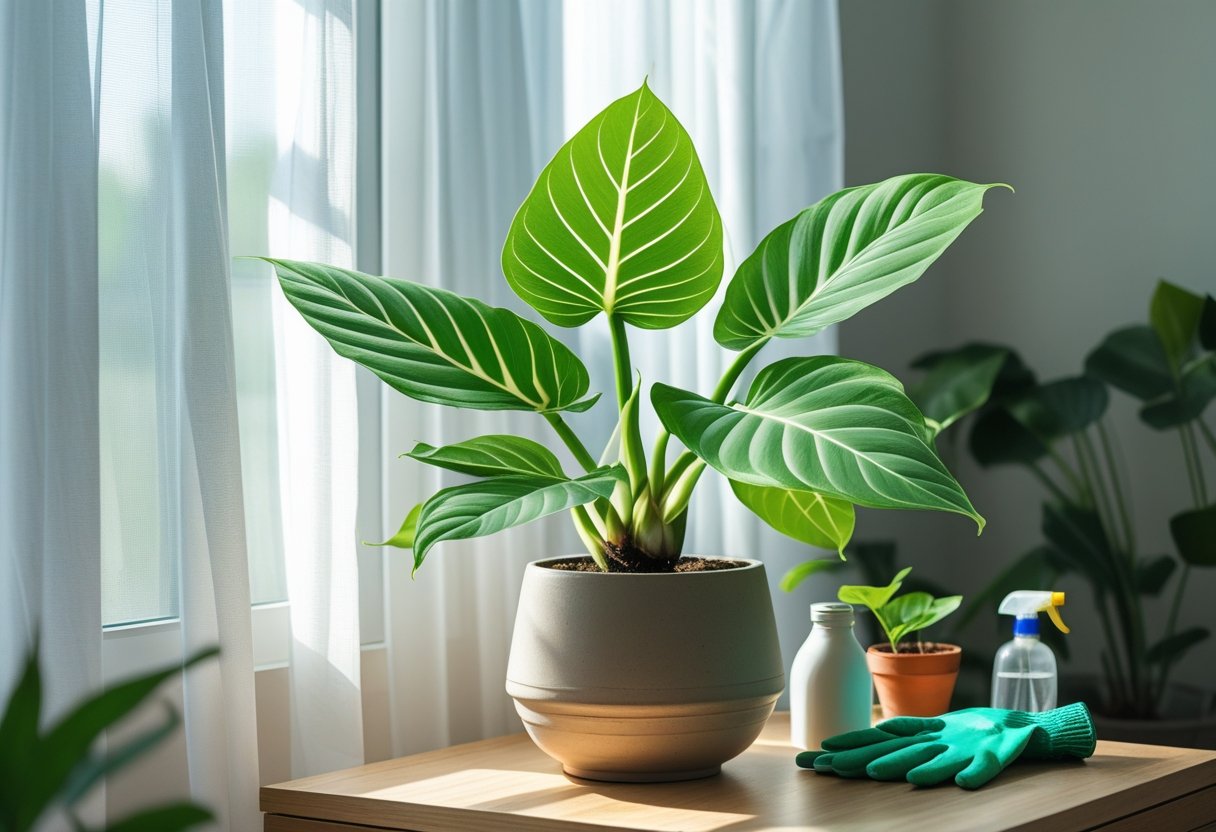
You might feel intimidated by caring for such an exotic-looking plant, but Alocasia plant care is more straightforward than many people assume. Understanding their natural tropical habitat helps you recreate the right conditions indoors, from proper lighting placement to maintaining adequate moisture levels.
This comprehensive guide covers everything you need to successfully grow your Alocasia, including optimal soil mixtures, watering schedules, nutrient requirements, and troubleshooting common issues. You’ll learn practical techniques for maintaining healthy foliage, preventing pest problems, and even propagating new plants from your existing collection.
Understanding Alocasia Plants
Alocasia plants are tropical perennials from the Araceae family, featuring distinctive arrow-shaped leaves with prominent veining. These striking ‘Elephant Ear’ plants encompass over 70 species with varying sizes, leaf patterns, and growth habits that require specific care considerations.
Popular Alocasia Varieties
Alocasia amazonica displays dark green leaves with white veins and can reach 2 feet tall. This hybrid variety thrives in bright, indirect light and maintains compact growth.
Alocasia zebrina features distinctive zebra-striped stems with dark green, arrow-shaped leaves. The stems showcase black and light green bands that make this variety instantly recognizable.
Alocasia odora grows significantly larger than most varieties, reaching 4-8 feet indoors. Its thick, glossy leaves can span 2-4 feet across when mature.
Alocasia macrorrhiza, also called giant taro, produces massive leaves up to 5 feet long. This variety requires ample space and can grow 6-15 feet tall in optimal conditions.
The Alocasia Silver Dragon boasts silvery-green leaves with dark green veins, offering a unique color variation. Each variety has specific care requirements based on its natural habitat and growth patterns.
Growth Characteristics
Fast-growing alocasias favor the warmth and humidity of their native rainforest habitats. Most varieties prefer temperatures between 65-80°F with humidity levels above 50%.
These plants grow from underground rhizomes that store energy and water. The rhizome system allows alocasias to enter dormancy during unfavorable conditions.
Alocasias produce new leaves from the center while older leaves naturally yellow and drop. Each plant typically maintains 3-6 active leaves at any time.
Seasonal Growth Patterns:
- Spring and summer: Active growth period
- Fall: Slowed growth begins
- Winter: Possible dormancy in cooler conditions
The large, heart-shaped leaves can reach impressive sizes depending on the variety. Leaf size directly correlates with plant maturity and care quality.
Toxicity and Safety
All alocasia plants contain calcium oxalate crystals that make them toxic to humans and pets. These crystals cause immediate burning sensations in the mouth and throat if ingested.
Symptoms of ingestion include:
- Mouth and throat irritation
- Difficulty swallowing
- Excessive drooling
- Nausea and vomiting
Keep alocasias away from children and pets, especially cats and dogs who may chew on leaves. Place plants on high shelves or in rooms with restricted access.
Wear gloves when handling alocasias during repotting or pruning. The sap can cause skin irritation in sensitive individuals.
If ingestion occurs, rinse the mouth immediately with water and contact poison control or a veterinarian. Do not induce vomiting as this can cause additional throat irritation.
Light and Placement Requirements
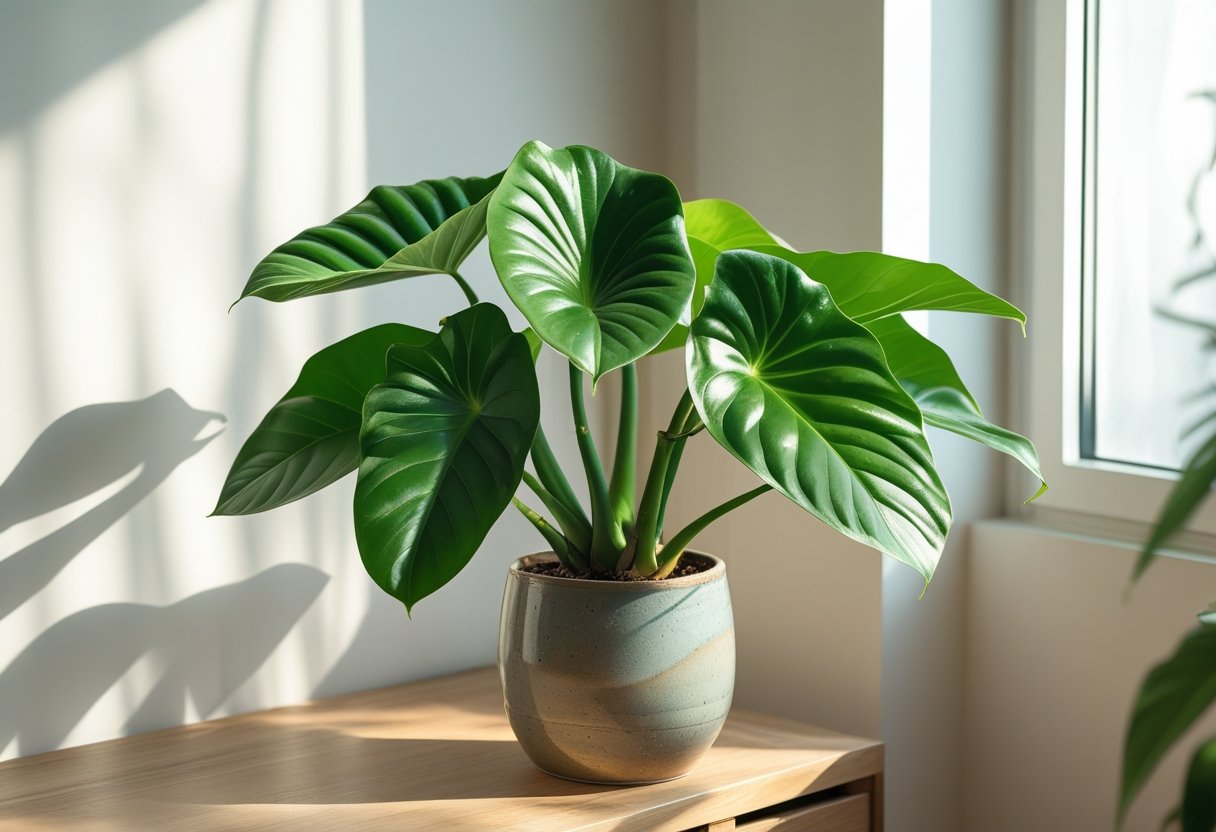
Alocasia plants require bright, indirect light for 6-8 hours daily to maintain their striking foliage. Proper placement away from direct sunlight prevents leaf burn while ensuring adequate illumination for healthy growth.
Ideal Lighting Conditions
Your Alocasia thrives in bright, indirect sunlight that mimics its natural tropical habitat. Position your plant where it receives filtered light through sheer curtains or blinds.
Direct sunlight will scorch the leaves of Alocasia amazonica and other varieties, causing brown patches and leaf damage. The intense rays dehydrate the plant and fade the vibrant green coloration.
Low light conditions stunt growth and reduce leaf size. Your Alocasia zebrina will develop smaller, less defined patterns in insufficient lighting.
Supplemental lighting options:
- LED grow lights positioned 12-18 inches away
- Fluorescent bulbs for 8-10 hours daily
- Full-spectrum lights during winter months
Seasonal adjustments are necessary as natural light changes throughout the year. Move your plant closer to windows during darker months.
Location in the Home
Best placement locations:
- East-facing windows with morning sun
- North-facing windows with consistent light
- 3-6 feet from south or west windows
Rotate your plant weekly to ensure even growth and prevent leaning toward the light source. This maintains the plant’s symmetrical shape.
Avoid placing your Alocasia near heating vents or air conditioning units. These locations create temperature fluctuations that stress the plant.
Room considerations:
- Bathrooms with windows provide humidity and light
- Living rooms with large windows work well
- Avoid dark hallways or corners
Your Alocasia amazonica benefits from stable positioning. Frequent moves stress the plant and can cause leaf drop.
Signs of Improper Lighting
Too much light symptoms:
- Brown, crispy leaf edges
- Faded or yellowing leaves
- Wilting despite adequate watering
- Bleached appearance on leaf surfaces
Insufficient light indicators:
- Leggy, stretched growth
- Smaller new leaves
- Loss of variegation in Alocasia zebrina
- Slow or stopped growth
Your plant may drop leaves when lighting conditions change suddenly. This is a normal stress response that resolves with proper care.
Leaf positioning tells you about light levels. Leaves that curl or fold inward indicate too much direct sun. Leaves stretching toward light sources suggest inadequate illumination.
Monitor your Alocasia’s response to its current location. Healthy plants produce new leaves regularly and maintain their characteristic size and coloration.
Related Posts:
- Most Expensive Succulents: Rare and Valuable Plants for Collectors
- How to Grow Pineapple Express: Expert Tips and Techniques
- Baby Rubber Plant Care: Essential Tips for Healthy Growth and Maintenance
Soil and Potting Mix for Alocasia
Alocasia plants require well-draining soil with high organic matter and slightly acidic pH levels. Your container choice affects drainage and root health significantly.
Best Soil Characteristics
Your alocasia plant needs slightly acidic soil with a pH between 5.5 and 6.5 for optimal nutrient uptake. Standard potting soil alone retains too much moisture and can cause root rot.
The ideal soil mix must balance moisture retention with excellent drainage. Alocasia plants prefer soil with more peat moss than loam because peat moss helps retain appropriate moisture levels without waterlogging.
Key soil characteristics include:
- Fast drainage to prevent water accumulation
- High organic matter content
- Light, airy texture for root oxygenation
- pH range of 5.5-6.5
- Good moisture retention without becoming soggy
Native to tropical forests, alocasia plants naturally grow in nutrient-rich, well-draining forest floor soil. Your potting mix should mimic these natural conditions.
Recommended Potting Mixes
Create your own mix using regular potting mix, perlite, and peat moss as the foundation. This combination provides the drainage and organic matter your alocasia needs.
Basic DIY Recipe:
- 40% high-quality potting soil
- 30% peat moss or coconut coir
- 20% perlite
- 10% vermiculite or bark chips
Well-draining potting soil serves as your primary ingredient, ensuring proper air and water levels reach the roots. Add perlite to increase drainage and prevent compaction.
You can substitute coconut coir for peat moss if preferred. Bark chips improve drainage while adding organic matter as they decompose slowly.
Selecting Pots and Containers
Choose pots with multiple drainage holes to prevent water accumulation around roots. Terracotta and ceramic pots work well because they allow air movement through the walls.
Your pot size should allow 1-2 inches of space around the root ball. Oversized containers hold excess moisture that can lead to root problems.
Container requirements:
- Drainage holes: Multiple holes in the bottom
- Size: 1-2 inches larger than root ball diameter
- Material: Terracotta, ceramic, or plastic with good drainage
- Depth: Adequate for root development without being excessive
Avoid containers without drainage or those made from non-porous materials like glazed ceramics without holes. Your alocasia plants need consistent moisture without waterlogged conditions.
Watering and Humidity Needs
Alocasia plants require consistent moisture without waterlogged soil and high humidity levels to thrive. Understanding proper watering techniques and humidity management prevents common issues like root rot and leaf problems.
How to Water Alocasia
Check the top inch of soil moisture several times per week to determine when your Alocasia needs water. Water when this top layer feels dry to the touch.
Use room-temperature water to avoid shocking the roots. Cold water can slow growth and stress the plant.
Proper Watering Technique:
- Water slowly until excess drains from the bottom
- Empty drainage saucers within 30 minutes
- Never allow the plant to sit in standing water
Overwatering leads to root rot, which causes yellow leaves and eventual plant death. Root rot appears as black, mushy roots and a foul smell from the soil.
Signs of underwatering include drooping leaves and dry, pulling-away soil. The leaves may also develop brown, crispy edges when the plant lacks adequate moisture.
Ensure your pot has drainage holes. Without proper drainage, reduce watering frequency to prevent waterlogging.
Humidity Requirements
Alocasia prefers dry environments despite being tropical plants. They need high humidity in the air but not on their leaves.
Maintain humidity levels between 50-70% around your plant. Use a humidifier, pebble tray, or grouping with other plants to increase ambient moisture.
Humidity Methods:
- Place on pebble trays filled with water
- Use room humidifiers
- Group with other houseplants
- Keep away from heating vents
Avoid misting Alocasia leaves directly. Water lingering on leaves creates perfect conditions for harmful fungi and bacterial infections.
Monitor for signs of low humidity like brown leaf tips or edges. These symptoms often appear before more serious issues develop.
Managing Dormancy Period
Alocasia plants naturally enter dormancy during cooler months or periods of stress. During dormancy, growth slows significantly and some leaves may yellow and drop.
Reduce watering frequency by 50-75% during dormancy periods. The soil should dry out more between waterings since the plant absorbs less water.
Dormancy Care Schedule:
- Water every 2-3 weeks instead of weekly
- Check soil moisture more frequently
- Maintain humidity levels
- Reduce fertilizing completely
Yellow leaves during dormancy are normal and not necessarily signs of overwatering. The plant redirects energy to its underground tuber for survival.
Resume normal watering when new growth appears in spring. This signals the end of the dormancy period and increased water needs.
Fertilizing and Nutrient Management
Alocasia plants require consistent nutrition to maintain their large, vibrant foliage and support rapid growth during active seasons. Balanced fertilizer ratios and proper timing prevent nutrient deficiencies while avoiding fertilizer burn.
Feeding Guidelines
Alocasia plants need fertilizing during spring and summer when they experience active growth. Feed your plant every 2-4 weeks during this period using a diluted liquid fertilizer.
Seasonal Schedule:
- Spring/Summer: Every 2-3 weeks with diluted fertilizer
- Fall/Winter: Reduce to monthly or stop completely
- Dormant period: No fertilization needed
Always dilute liquid fertilizers to half strength to prevent root burn. Water your plant before applying fertilizer to protect the root system.
Stop fertilizing if you notice brown leaf tips or salt buildup on the soil surface. These indicate over-fertilization and require immediate flushing with plain water.
Monitor your plant’s response after each feeding. Healthy growth appears as new leaves and stronger stems without yellowing or browning.
Choosing the Right Fertilizer
Balanced fertilizers with equal N-P-K ratios work best for Alocasia. Look for formulations like 10-10-10 or 20-20-20 that provide nitrogen, phosphorus, and potassium in equal amounts.
Fertilizer Options:
| Type | Benefits | Application |
|---|---|---|
| Liquid fertilizer | Quick absorption, easy dilution | Every 2-3 weeks |
| Slow-release granules | Long-lasting, less frequent application | Every 3-4 months |
| Organic options | Gentle, improves soil structure | Monthly |
Nitrogen promotes lush foliage growth that Alocasia plants are known for. Phosphorus supports healthy root development and overall plant strength.
Potassium helps your plant resist diseases and maintain proper water balance. Avoid fertilizers with high salt content that can damage sensitive Alocasia roots.
Organic alternatives include compost, worm castings, or fish emulsion for gentler, sustained nutrition.
Pruning and Routine Maintenance
Regular pruning keeps your Alocasia healthy by removing damaged tissue and preventing disease spread. Clean leaves ensure optimal photosynthesis and pest prevention.
Removing Damaged Foliage
Yellow leaves signal natural aging or stress and should be removed promptly. These leaves drain energy from your plant and can attract pests or develop fungal issues.
Use clean, sharp pruning shears to trim yellow or damaged leaves at the base of the petiole. Cut close to the main stem without damaging healthy tissue.
Drooping leaves may recover if the issue is watering-related, but persistently drooping foliage should be removed. Always wear gloves when pruning as Alocasia can cause skin irritation.
The best time to prune is during spring and summer when your plant grows actively. Remove brown, mushy, or spotted leaves immediately regardless of season.
Sterilize your tools with rubbing alcohol between cuts to prevent spreading disease.
Cleaning Leaves
Large Alocasia leaves collect dust that blocks light and reduces photosynthesis efficiency. Clean leaves also help you spot pest problems early.
Wipe leaves weekly with a damp, soft cloth or sponge. Use lukewarm water and gentle circular motions on both leaf surfaces.
For stubborn buildup, add a drop of mild dish soap to your cleaning water. Rinse thoroughly afterward to prevent soap residue.
Avoid leaf shine products, which can clog leaf pores and attract more dust. Support large leaves with one hand while cleaning to prevent tearing.
Clean leaves improve your plant’s ability to absorb light and release moisture through transpiration.
Managing Pests and Diseases
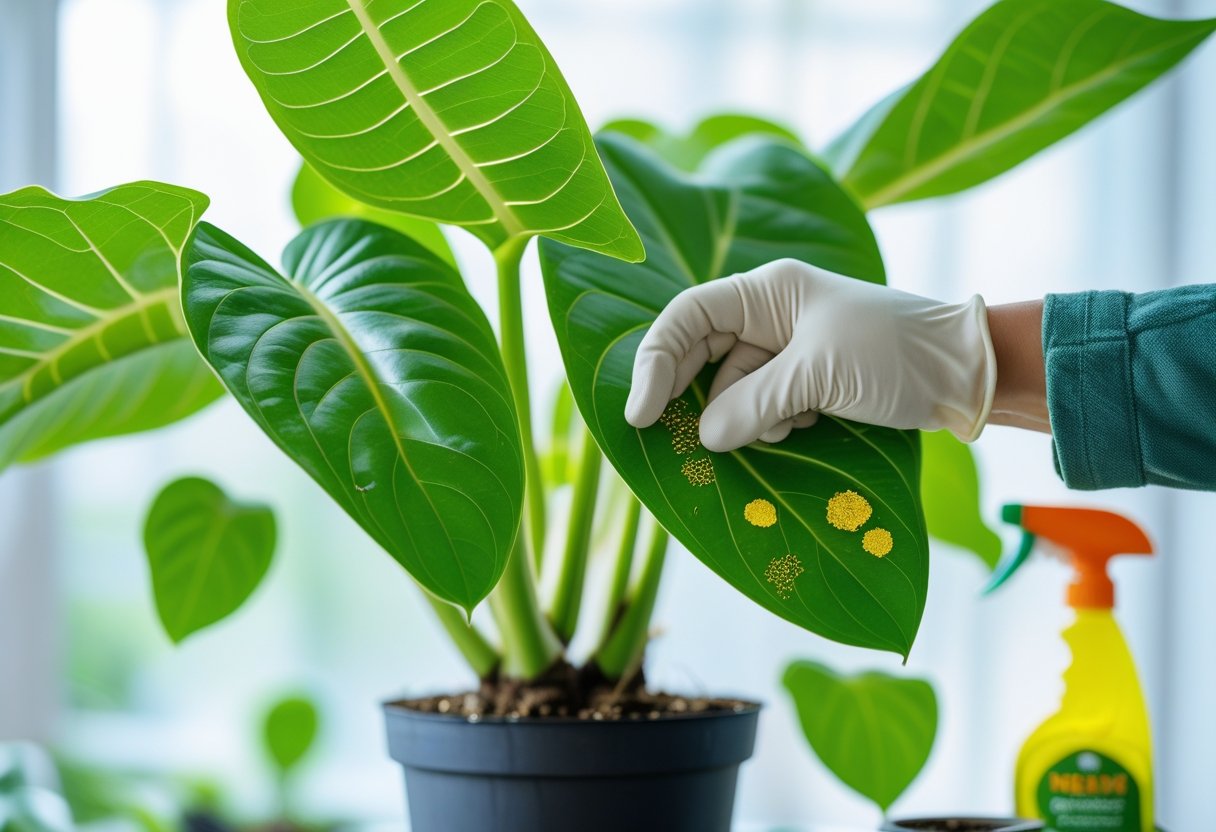
Alocasia plants face several common threats including spider mites, aphids, and scale insects that feed on their foliage. Root rot from overwatering and various fungal infections can quickly damage or kill these tropical plants if left untreated.
Related Posts:
- Best Water Globes for Plants: Top Self-Watering Solutions for Indoor Gardeners
- Should You Mulch Onions: Benefits and Best Practices for Your Garden
- Growing Apricots from Seeds: Step-by-Step Guide to Success
Common Pests Affecting Alocasia
Spider mites, aphids, and mealybugs commonly attack alocasia plants and can cause significant damage to the striking foliage.
Spider mites appear as tiny moving specks on leaf undersides. They create fine webbing and cause yellow stippling on leaves. These pests thrive in dry conditions with poor air circulation.
Aphids cluster on new growth and leaf undersides, appearing as small green, black, or white insects. They secrete sticky honeydew that attracts ants and can lead to sooty mold development.
Scale insects attach themselves to stems and leaves as small, brown, oval bumps. They’re difficult to remove once established and weaken plants by sucking sap.
Mealybugs look like small cotton balls in leaf joints and stem crevices. They multiply rapidly and can spread to nearby plants quickly.
Treat infestations with insecticidal soap, neem oil, or rubbing alcohol applied directly to affected areas. Regular plant inspections help catch pest problems early before they become severe.
Preventing and Treating Root Rot
Root rot is the most serious disease affecting alocasia plants and typically results from overwatering or poor drainage conditions.
Early symptoms include yellowing leaves, soft stems, and a musty odor from the soil. Advanced cases show black, mushy roots and complete plant collapse.
Address root rot by first correcting overwatering and improving drainage. Remove the plant from its pot and examine the root system carefully.
Cut away all black, mushy, or damaged roots with sterile scissors. Rinse remaining healthy roots under running water to remove infected soil particles.
Repot in fresh, well-draining potting mix that contains perlite or orchid bark. Choose a pot with drainage holes and avoid watering until the top inch of soil feels dry.
Prevention steps:
- Water only when topsoil is dry
- Use pots with drainage holes
- Add perlite or sand to improve soil drainage
- Avoid letting plants sit in standing water
Fungal and Bacterial Infections
Alocasia plants are susceptible to various fungal and bacterial diseases that typically develop in humid conditions with poor air circulation.
Leaf spot diseases appear as brown or black circular spots on leaves. These fungal infections spread rapidly in wet conditions and can defoliate plants completely.
Bacterial blight causes water-soaked lesions that turn brown or black. Affected areas often have yellow halos and may produce a foul smell.
Keep leaves dry and provide good air circulation to prevent disease development. Water at soil level rather than overhead to avoid wetting foliage.
Remove infected leaves immediately with sterile tools to prevent spread. Dispose of diseased plant material in household trash, not compost bins.
Treat active infections with appropriate fungicides and isolate affected plants from healthy ones. Copper-based fungicides work well for bacterial infections.
Improve growing conditions by increasing air circulation, reducing humidity around leaves, and spacing plants appropriately to prevent future outbreaks.
Propagation Methods for Alocasia
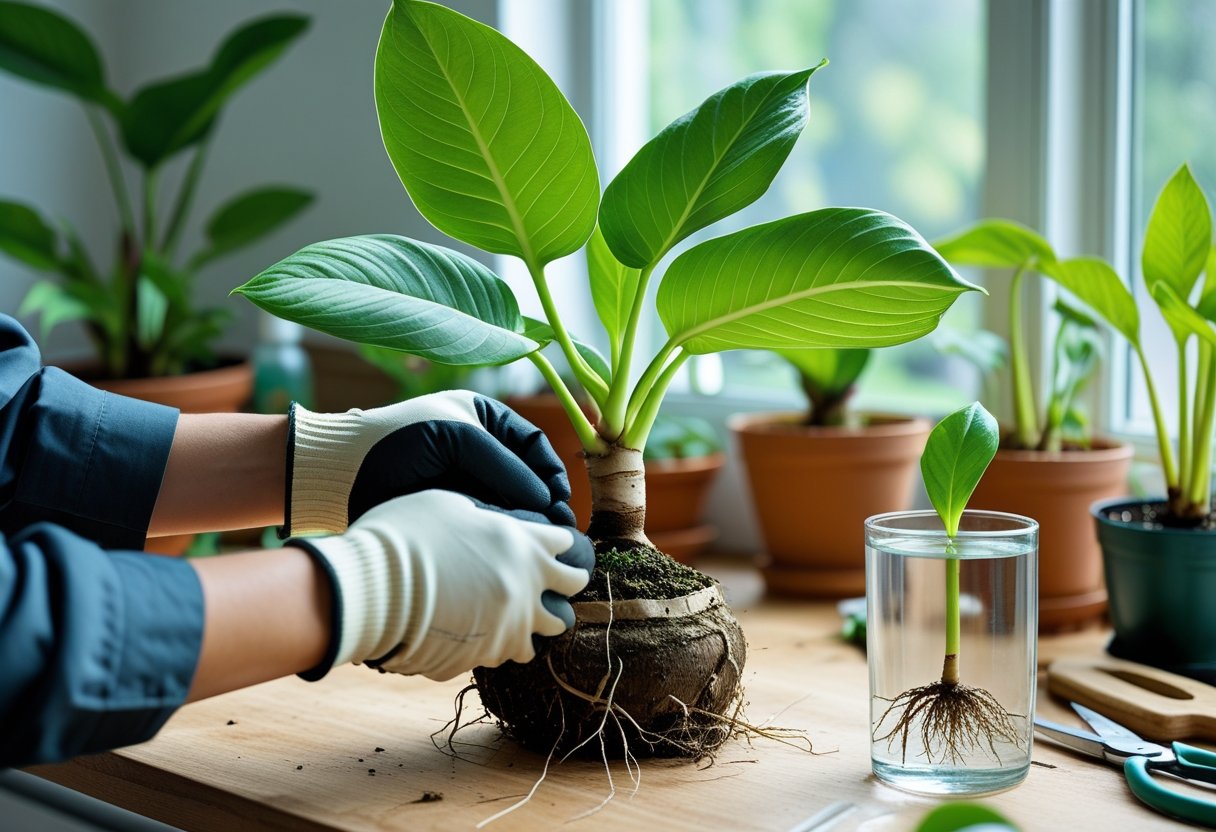
Alocasia plants multiply most successfully through division of existing clumps, while seed propagation presents significant challenges for home gardeners. Division methods using rhizomes and offsets provide the most reliable results for expanding your collection.
Propagating by Division
Division remains the primary method for propagating Alocasia plants because it produces identical copies of the parent plant. You can divide Alocasia through three main approaches: rhizome division, offset separation, and bulb division.
Rhizome Division involves carefully removing the plant from its container and identifying natural separation points in the underground stem system. Use a clean, sharp knife to cut between sections, ensuring each division has roots and at least one growing point.
Offset Separation works best when small plants develop around the base of the mother plant. Gently separate these offsets with their own root systems during repotting.
Timing and Conditions matter significantly for success. Spring and early summer provide optimal conditions because plants actively grow during these periods. Avoid division during winter dormancy when plants lack energy for recovery.
After division, plant each section in well-draining potting mix. Keep soil consistently moist but not waterlogged. Place divisions in bright, indirect light and maintain temperatures between 65-75°F.
Growing Alocasia from Seeds
Seed propagation presents considerable challenges for Alocasia cultivation. Most Alocasia varieties rarely flower indoors, making seed collection difficult for home gardeners.
Seed Viability decreases rapidly after harvest. Fresh seeds provide the best germination rates, but obtaining viable seeds requires mature plants that flower regularly. Commercial seeds often show poor germination rates.
Germination Process requires specific conditions when viable seeds are available. Sow seeds on moist seed-starting mix at 75-80°F. Cover lightly and maintain consistent moisture through plastic covering or humidity domes.
Growth Timeline extends significantly compared to division methods. Seedlings develop slowly and may take several months to reach transplant size. Young plants grown from seed often differ from parent plants in appearance and characteristics.
Practical Considerations make seed propagation impractical for most situations. Division methods produce faster results with guaranteed plant characteristics, making them preferable for home propagation projects.
Frequently Asked Questions
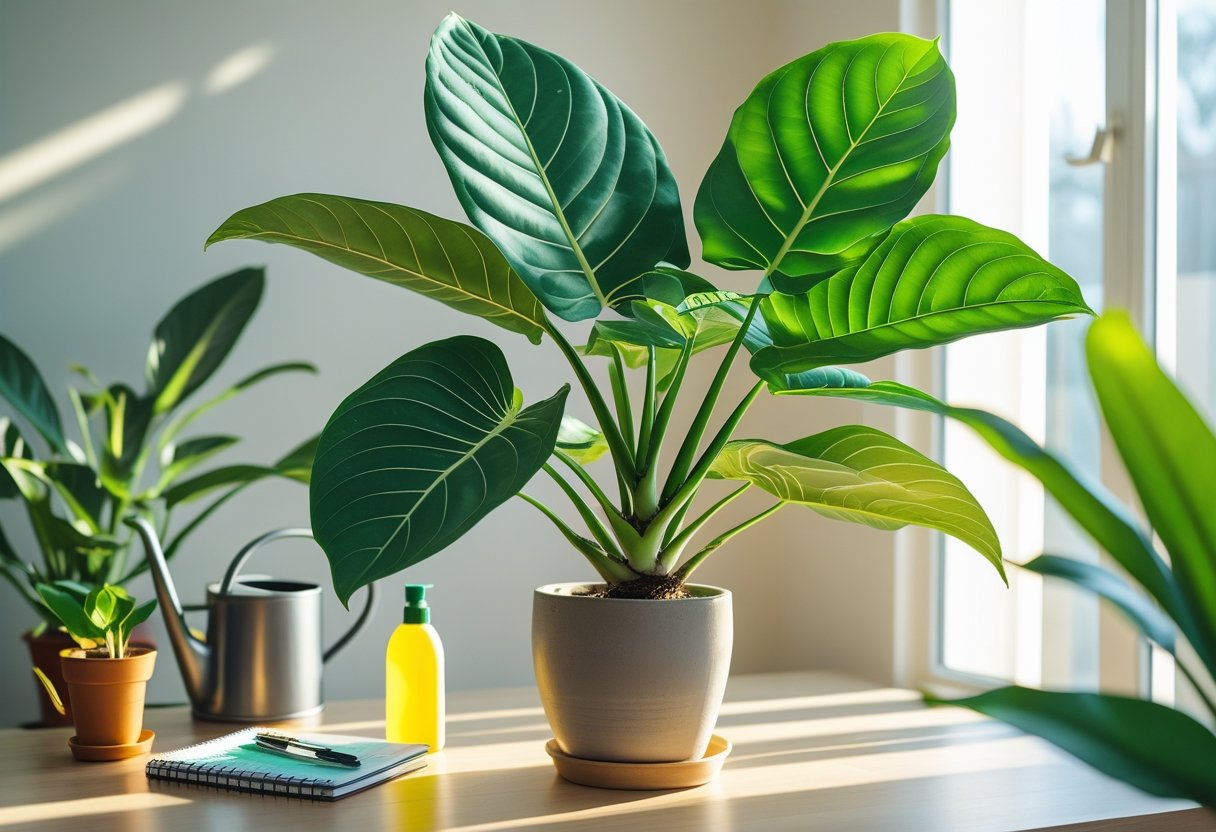
Alocasia care involves specific watering schedules, proper lighting placement, and maintaining tropical conditions indoors. Most questions focus on watering frequency, pest management, and creating the right environment for healthy growth.
How often should you water an Alocasia plant?
Water your Alocasia when the top inch of soil feels dry to the touch. This typically occurs every 7-10 days during growing season and less frequently in winter.
Check soil moisture by inserting your finger into the potting mix. The plant prefers consistently moist but not waterlogged conditions.
Reduce watering frequency during dormant winter months when growth slows. Overwatering causes root rot, while underwatering leads to drooping leaves.
What are the optimal lighting conditions for Alocasia plants indoors?
Place your Alocasia in bright, indirect light for 6-8 hours daily. Direct sunlight burns the leaves and causes brown spots.
East or north-facing windows provide ideal lighting conditions. You can also position the plant 3-4 feet from a south-facing window.
Supplement with grow lights if natural light is insufficient. The plant needs consistent light levels to maintain its vibrant foliage patterns.
What are the key steps to propagate Alocasia successfully?
Divide your Alocasia during repotting by separating offset bulbs from the parent plant. Each division needs healthy roots and at least one growing point.
Plant divisions in well-draining potting mix with high humidity. Keep soil consistently moist but not soggy during the rooting process.
Maintain temperatures between 70-80°F and provide bright, indirect light. New growth typically appears within 2-4 weeks under proper conditions.
How can you identify and treat common pests and diseases in Alocasia plants?
Spider mites create fine webbing and cause yellow stippling on leaves. Increase humidity and spray with neem oil weekly until eliminated.
Aphids cluster on new growth and leaf undersides. Remove with insecticidal soap or a strong water spray applied every few days.
Root rot appears as black, mushy roots and yellowing leaves. Remove affected roots, repot in fresh soil, and reduce watering frequency immediately.
Scale insects appear as small brown bumps on stems and leaves. Scrape off manually and treat with rubbing alcohol on a cotton swab.
What are the benefits of growing Alocasia as an indoor plant?
Alocasia plants purify indoor air by removing common household toxins like formaldehyde and benzene. Their large leaves increase oxygen production in your living space.
The distinctive arrow-shaped or heart-shaped foliage adds tropical appeal to any room. Many varieties feature striking patterns and colors that serve as living artwork.
These plants adapt well to container growing and maintain compact sizes indoors. They provide year-round greenery without requiring outdoor garden space.
What is the ideal temperature and humidity range for an Alocasia plant?
Maintain temperatures between 65-80°F for optimal growth and health. Avoid placing your plant near heating vents, air conditioners, or drafty windows.
Your Alocasia requires 60-80% humidity levels to thrive indoors. Use a humidifier, pebble tray, or group plants together to increase moisture.
Temperatures below 60°F cause dormancy and leaf drop. Higher humidity prevents brown leaf tips and maintains the plant’s glossy appearance throughout the year.