
*I get commissions for purchases made through affiliate links in this post at no extra cost to you. I do not promote anything I haven’t validated or personally used myself.
Roses are among the most cherished flowers in gardens worldwide, but they frequently fall victim to beetle infestations that can quickly destroy their beauty. These copper-colored pests can skeletonize leaves and devour flower petals, turning your prized rose garden into a disappointing sight within days.
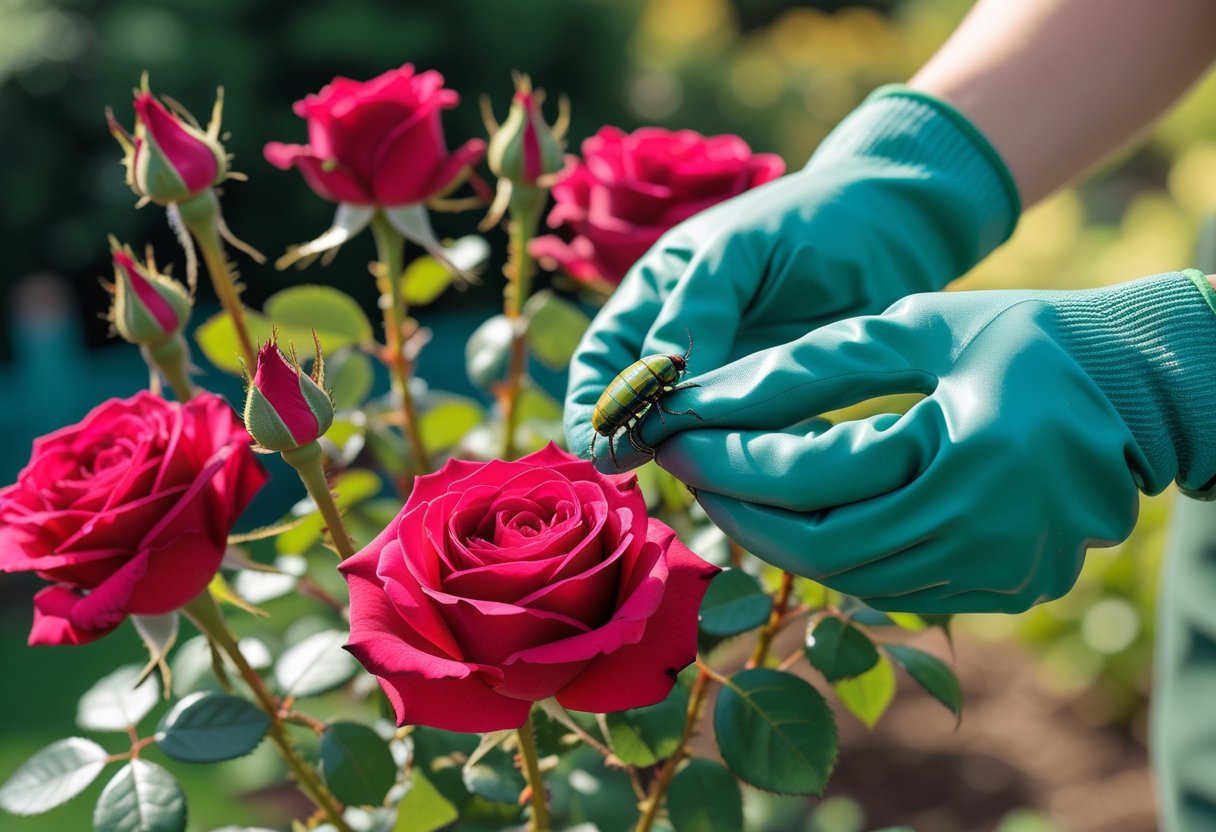
You can effectively eliminate beetles from your roses using a combination of manual removal, targeted spraying, biological controls, and preventative measures that protect your rose bushes long-term. The key lies in identifying the infestation early and applying the right treatment methods consistently.
Learning how to get rid of beetles on roses starts with identifying the types of beetles that attack your garden and using proven control strategies. From natural removal methods to companion planting techniques, combining multiple approaches helps create a strong, effective defense system to keep your rose bushes healthy and thriving all season long.
Identifying Beetle Infestations on Roses
Japanese beetles create distinctive metallic green and copper-colored damage patterns on rose petals and leaves, while other beetle species like rose chafers and black vine weevils cause different types of destruction. Understanding their life cycles helps determine the best timing for treatment interventions.
Signs of Japanese Beetle Damage
Japanese beetles on roses create unmistakable damage patterns that make identification straightforward. You will notice skeletonized leaves where beetles eat the soft tissue between leaf veins, leaving only the skeletal framework behind.
Rose petals show irregular holes and ragged edges from beetle feeding. The metallic green and copper-colored insects measure about half an inch long and often feed in groups.
Damaged flowers appear shredded or completely consumed, particularly light-colored varieties that attract more beetles. You may find beetles actively feeding during warm, sunny days between 10 AM and 4 PM.
Look for brown, wilted areas on leaves and buds where beetles have concentrated their feeding. Heavy infestations can completely defoliate rose bushes within days.
Related Posts:
- List of Common Garden Pests and Diseases: Best Ways to Identify and Treat Them Effectively
- Can You Compost Cooking Oil: A Complete Guide to Safe Disposal Methods
- What Happens to Gardens in Winter: Understanding the Direct Effects of Cold Weather on Plants
Other Common Beetles That Affect Roses
Several beetle species target rose bushes beyond Japanese beetles, each creating distinct damage patterns. Rose chafers are tan-colored beetles that appear in late spring and early summer, feeding on both flowers and foliage.
Black vine weevils create notched edges along leaf margins during nighttime feeding. These dark, flightless beetles hide during the day and emerge after dark to feed.
Fuller rose beetles are grayish-brown with white stripes and create similar notched leaf damage. They are most active during warm evenings and early morning hours.
Hoplia beetles are small, fuzzy brown insects that feed primarily on rose petals and light-colored flowers. Rose curculios are small red beetles with long snouts that bore holes into rose buds and developing flowers.
Life Cycle of Japanese Beetles
Japanese beetle adults emerge from soil in mid-May and remain active through August. Female beetles lay 40-60 eggs in grass and soil during summer months, preferring moist, well-maintained lawns.
Grub stage occurs underground from late summer through the following spring. White C-shaped larvae feed on grass roots and organic matter in soil.
Pupation happens in late spring as grubs transform into adults just below the soil surface. This process takes 2-3 weeks depending on soil temperature and moisture levels.
The complete life cycle spans one full year. Adults live 30-45 days, with peak feeding activity occurring during the hottest parts of summer days when temperatures exceed 70°F.
Most Effective Methods to Get Rid of Beetles on Roses
Hand-picking remains the most effective method for controlling Japanese beetles on roses, while soap sprays and natural insecticides provide additional protection for your plants.
Hand-Picking and Physical Removal
Hand-picking beetles from roses is the most effective method for controlling the Japanese beetle population. This approach targets adult beetles directly without using chemicals.
Pick beetles during early morning or evening when they move slower. Drop collected beetles into soapy water to eliminate them effectively.
Best practices for hand-picking:
- Wear gloves to protect your hands
- Check roses daily during peak beetle season
- Focus on flower buds and new growth where beetles congregate
You can vacuum beetles using a small hand-held vacuum on its lowest setting if you prefer not handling them directly. Empty the vacuum immediately after collection.
This method works best for small infestations. Larger populations may require additional control measures combined with physical removal.
Using Insecticidal Soap and Sprays
Insecticidal soap provides effective control against beetles on roses. Mix the soap solution according to package directions and apply during cooler parts of the day.
Spray all plant surfaces including undersides of leaves where beetles may hide. Reapply after rain or heavy watering.
Application timing:
- Early morning (before 10 AM)
- Late evening (after 6 PM)
- Avoid spraying during hot, sunny conditions
Soapy water sprays work as physical control methods by suffocating beetles and disrupting their feeding behavior.
Test spray solutions on a small area first to check for plant sensitivity. Most roses tolerate soap sprays well when properly diluted.
Natural Insecticides and Organic Solutions
Neem oil serves as an effective foliar treatment against Japanese beetles on roses. This natural insecticide disrupts beetle feeding and reproduction cycles.
Apply neem oil every 7-14 days during active infestations. Mix according to label instructions and spray thoroughly on all plant parts.
Natural beetle control options:
| Method | Application | Frequency |
|---|---|---|
| Neem oil | Foliar spray | Weekly |
| Pyrethrin | Direct application | As needed |
| Beneficial nematodes | Soil application | Seasonal |
Natural remedies combined with sustainable gardening practices effectively control beetle infestations while protecting beneficial insects.
Beneficial nematodes target beetle grubs in soil, reducing next year’s adult population. Apply nematodes to moist soil in spring or fall when soil temperatures stay between 60-85°F.
Essential oil sprays containing peppermint or rosemary can deter beetles from roses. These oils require frequent reapplication but offer chemical-free protection.
Biological and Preventative Approaches
Long-term beetle control relies on disrupting their life cycle through soil treatments and creating an environment that naturally discourages infestations. Building a defense system around your roses involves targeting beetle larvae, selecting naturally resistant varieties, and attracting beneficial insects that prey on harmful beetles.
Milky Spore for Grub Control
Milky spore (Paenibacillus popilliae) targets Japanese beetle grubs in the soil before they emerge as adult beetles. This naturally occurring bacteria infects grubs when they consume it, causing a fatal disease that spreads throughout the grub population.
Apply milky spore powder directly to your lawn and garden areas surrounding your rose bushes during late spring or early fall. The bacteria requires living grubs to establish itself, so timing matters for effectiveness.
Application Guidelines:
- Apply 1 teaspoon every 4 feet in a grid pattern
- Water lightly after application
- Takes 1-3 years to fully establish
- Remains effective for 10-20 years once established
The treatment works best in areas with existing Japanese beetle populations. Soil temperatures between 60-70°F provide optimal conditions for bacterial development.
Cultivating Resistant Roses
Certain rose varieties naturally resist beetle damage through their leaf texture, scent, or chemical compounds. These roses require less intervention while maintaining their beauty throughout beetle season.
Beetle-Resistant Rose Types:
- Rugosa roses – Thick, leathery leaves deter feeding
- Species roses – Natural resistance from wild genetics
- Knock Out series – Bred for pest resistance
- David Austin roses – Many varieties show good resistance
Plant resistant varieties as your primary rose bushes, then supplement with more susceptible favorites in smaller numbers. This approach reduces overall beetle pressure while preserving garden diversity.
Choose roses with strong fragrance and dense foliage. Beetles typically avoid roses with tough leaves or those that produce natural repellent compounds.
Encouraging Natural Beetle Predators
Beneficial insects and birds provide continuous beetle control when you create habitat that supports their populations. These natural enemies target beetles at multiple life stages without harming your roses.
Key Beetle Predators:
- Birds – Robins and starlings eat grubs in soil
- Ground beetles – Consume eggs and larvae
- Parasitic wasps – Attack beetle eggs
- Tachinid flies – Parasitize adult beetles
Plant native flowering plants near your rose bushes to provide nectar sources for beneficial insects. Avoid broad-spectrum pesticides that kill both harmful and helpful species.
Maintain small areas of undisturbed soil where ground beetles can shelter during winter. Install bird houses and provide water sources to encourage beetle-eating bird species in your garden.
Create diverse plantings with varying heights and bloom times. This approach supports multiple predator species that remain active throughout the growing season when beetles threaten your roses.
Companion Planting and Repellent Strategies
Strategic companion planting creates natural barriers against Japanese beetles while specific aromatic plants like catnip, chives, and garlic actively repel these destructive pests. Smart garden layout and plant positioning maximize these protective effects throughout your rose beds.
Using Catnip, Chives, and Garlic
Companion planting with garlic, chives, and catnip repels Japanese beetles when planted strategically around your roses. These aromatic plants release natural compounds that beetles find unpleasant.
Plant garlic bulbs 6-8 inches from rose bases in fall for spring protection. The sulfur compounds in garlic create an invisible barrier that deters beetles from landing on nearby roses.
Chives work similarly to garlic but offer the added benefit of edible flowers and leaves. Space chive clumps 12 inches apart around rose perimeters for consistent coverage.
Catnip proves particularly effective against Japanese beetles due to its nepetalactone content. Plant catnip 18 inches from roses to prevent it from overwhelming smaller rose varieties.
Create planting combinations by grouping these three plants together. This triple-threat approach provides layered protection and maintains deterrent effects throughout the growing season.
Garden Design to Minimize Beetle Damage
Position your rose garden away from areas that naturally attract Japanese beetles, such as composting areas or overly moist soil conditions. Beetles prefer certain microclimates within gardens.
Design raised beds for your roses to improve drainage and create physical separation from ground-dwelling beetle populations. Elevated planting makes hand-picking easier when beetles do appear.
Space companion plants in strategic rings around individual roses or rose groupings. Place shorter repellent plants like chives closest to roses, with taller plants like catnip forming outer protective circles.
Install gravel or mulch pathways between rose beds and beetle-attracting plants like fruit trees or vegetables. These buffer zones reduce beetle migration between preferred feeding areas and your rose garden.
Beetle Traps and Their Proper Use
Japanese beetle traps use floral lures and pheromones to attract beetles, but research shows these traps catch about 75% of beetles while potentially attracting more to your garden. Proper placement and understanding their limitations determines whether traps help or worsen your rose beetle problem.
Effectiveness and Placement of Japanese Beetle Traps
Japanese beetle traps contain floral and pheromone lures that beetles find irresistible. These attractants draw beetles into containers they cannot escape from.
Trap placement is critical for success:
- Position traps at least 50 feet away from your roses and other valuable plants
- Place them away from garden beds to avoid attracting more beetles to your yard
- Install traps downwind from your roses when possible
You can create effective homemade versions using simple materials. A 5-gallon bucket filled halfway with water and liquid dish soap creates a drowning trap when combined with attractant lures.
Commercial traps typically capture significant numbers of beetles. However, their effectiveness depends heavily on proper positioning relative to the plants you want to protect.
Potential Drawbacks and Risks of Beetle Traps
Many gardeners report that commercially made traps attracted more Japanese beetles to their roses. This occurs because the powerful attractants can draw beetles from wider areas than just your immediate garden.
Key risks include:
- Increased infestations when traps are placed too close to roses
- Attracting beetles that wouldn’t have otherwise found your garden
- Worsening problems by bringing more beetles to your property
Some experts and researchers say these devices aren’t the best way to keep Japanese beetles away. The traps may capture some beetles but often attract more than they eliminate.
Consider traps as supplementary tools rather than primary beetle control methods. Combine them with other management strategies like hand-picking, beneficial nematodes, or targeted spraying for better results on your roses.
Related Posts:
- How to Get Rid of Garter Snakes in My Garden: Effective Natural and Humane Removal Methods
- When is the Best Time to Start a Vegetable Garden: Expert Advice
- List of 10 Easy DIY Garden Trellis Ideas for Your Backyard
Maintaining Healthy Rose Gardens for Long-Term Protection
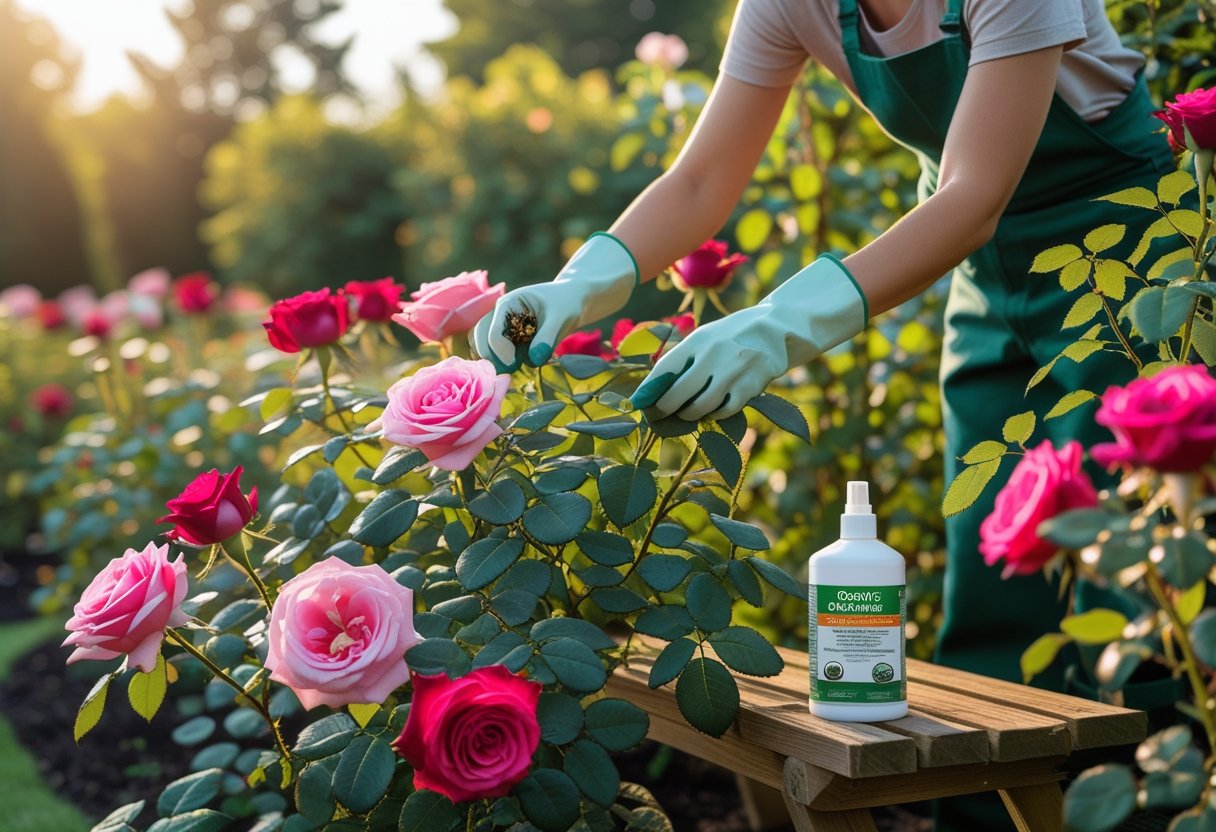
Effective beetle prevention requires consistent monitoring throughout growing seasons and proper safety protocols when applying treatments. Regular garden maintenance creates an environment where your roses can naturally resist pest infestations.
Ongoing Monitoring and Seasonal Care
Weekly inspections form the foundation of successful beetle management in your rose garden. Check the undersides of leaves, stems, and flower buds every 5-7 days during peak growing season from May through September.
Look for early warning signs including small holes in leaves, metallic beetles on blooms, or clusters of eggs on stems. Document pest activity in a garden journal to identify patterns and timing for your specific location.
Seasonal care tasks strengthen your roses against beetle damage:
- Spring: Apply 2-3 inches of organic mulch around rose bushes to suppress overwintering beetle larvae
- Summer: Remove damaged flowers and leaves immediately to prevent attracting more beetles
- Fall: Clear fallen leaves and debris where beetles overwinter
Consistent inspections and proper care are keys to long-term success in maintaining pest-free rose gardens. Water roses at soil level rather than overhead to reduce moisture on foliage that attracts certain beetle species.
Safety Tips When Using Treatments
Personal protective equipment prevents exposure to treatments and beetle irritants. Wear long sleeves, closed-toe shoes, and nitrile gloves when handling any pest control products or removing beetles by hand.
Apply treatments during calm weather conditions with temperatures below 80°F. Avoid spraying during windy conditions that can drift chemicals onto beneficial plants or surfaces.
Application timing maximizes effectiveness while protecting beneficial insects:
| Treatment Type | Best Application Time | Safety Notes |
|---|---|---|
| Soapy water spray | Early morning or evening | Non-toxic to humans and pets |
| Neem oil | Evening hours only | Can harm bees if applied during bloom |
| Hand removal | Any time beetles are present | Use gloves to avoid skin irritation |
Store all treatments in original containers away from children and pets. Natural predators like lady beetles and lacewings help control rose pests, so avoid broad-spectrum insecticides that eliminate beneficial insects along with harmful beetles.
Frequently Asked Questions
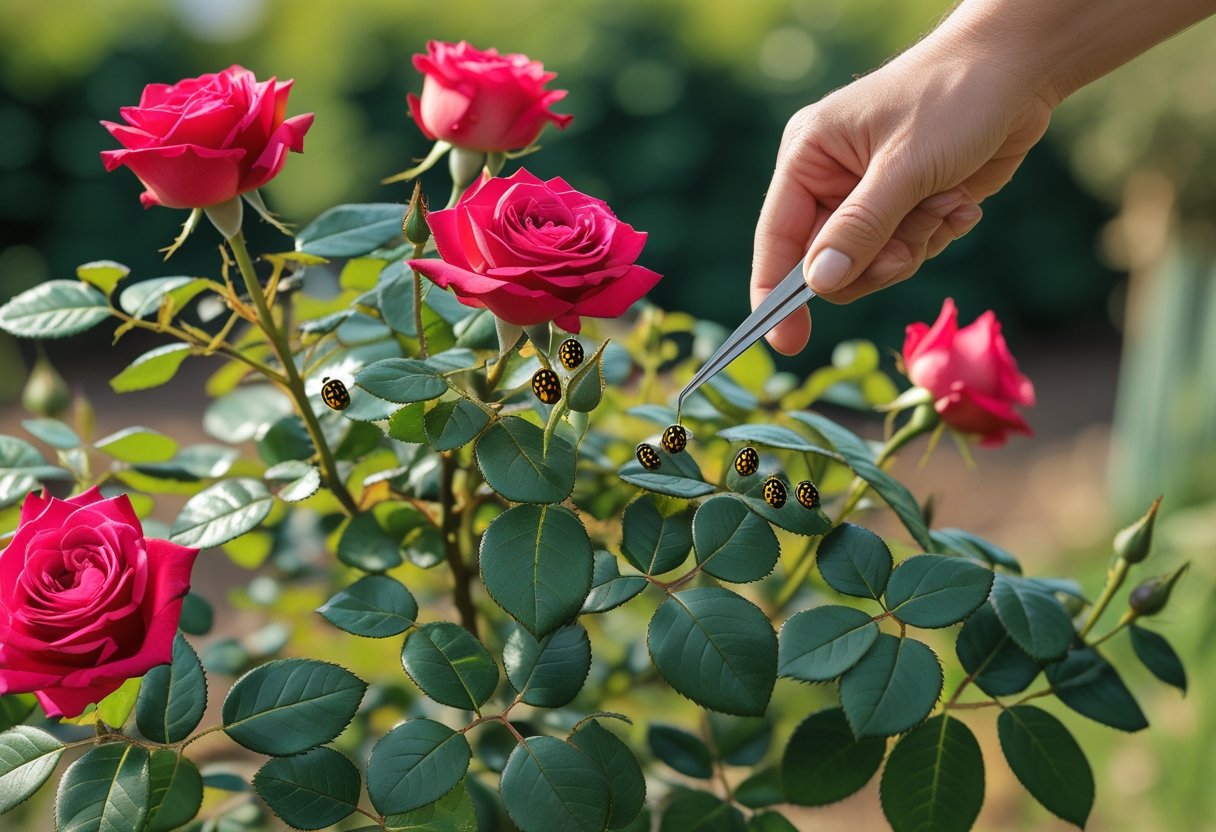
Rose gardeners often seek practical solutions for beetle control using common household items and natural methods. These questions address specific remedies, application techniques, and targeted approaches for different beetle species.
What home remedies can help eliminate beetles from rose plants?
Soapy water spray works as an effective home remedy for beetle control. Mix 2 tablespoons of mild dish soap with one gallon of water and spray directly on affected areas.
Neem oil provides another natural solution that disrupts beetle feeding patterns. Apply during early morning or evening hours to avoid leaf burn.
Hand-picking beetles into soapy water containers offers immediate results for small infestations. Wear gloves and drop beetles into water mixed with dish detergent.
What are the most effective natural remedies for Japanese beetle infestations on roses?
Manual removal combined with soapy water provides the most reliable natural control method. Remove beetles during morning hours when they move slower.
Row covers or cheesecloth barriers protect roses during peak beetle season. Install covers for 2-3 weeks after spotting the first beetles.
Beneficial nematodes applied to soil target beetle grubs before they mature. Apply these microscopic worms to moist soil in spring or fall.
Can vinegar solutions be used to deter beetles from roses, and how?
White vinegar mixed with water creates a deterrent spray for beetles. Use a 1:1 ratio of vinegar to water and apply to rose foliage.
Avoid spraying vinegar solutions during hot, sunny conditions as this may damage leaves. Apply during cooler morning or evening hours.
Vinegar solutions work better as deterrents than elimination methods. Reapply every few days for continued effectiveness.
Are there any safe and effective methods to control black and Hoplia beetles on roses?
Diatomaceous earth sprinkled around rose bases creates a physical barrier against crawling beetles. Use food-grade diatomaceous earth only.
Companion planting with marigolds, catnip, or chives naturally repels various beetle species. Plant these around your rose beds for ongoing protection.
Yellow sticky traps placed near roses catch flying beetles without harmful chemicals. Position traps at plant height for maximum effectiveness.
How can I use Dawn dish soap to treat beetle problems on my rose bushes?
Create a spray solution using 2 tablespoons of Dawn dish soap per gallon of water. This concentration effectively controls beetles without harming roses.
Apply the soapy solution directly to beetles and affected plant areas. The soap suffocates beetles and disrupts their ability to cling to plants.
Rinse treated roses with clean water after 2-3 hours to prevent soap residue buildup. Repeat applications every 3-4 days as needed.
What are the best practices for using Japanese beetle traps around rose gardens?
Place beetle traps at least 30 feet away from your rose garden. Traps positioned too close actually attract more beetles to your plants.
Empty traps daily during peak beetle season to maintain effectiveness. Full traps lose their attraction power and may allow beetles to escape.
Use traps as part of a comprehensive control strategy rather than relying on them alone. Combine with hand-picking and barriers for best results.