
*I get commissions for purchases made through affiliate links in this post at no extra cost to you. I do not promote anything I haven’t validated or personally used myself.
Pear trees require proper nutrition to produce abundant, high-quality fruit and maintain robust health throughout their growing seasons. The best fertilizer for pear trees is a balanced fertilizer with an NPK ratio of 6-2-4 or 10-10-10, applied in early spring and late summer to support optimal growth and fruit production. Organic fertilizers like compost and well-rotted manure provide excellent long-term soil health benefits, while synthetic options deliver immediate nutrient availability.
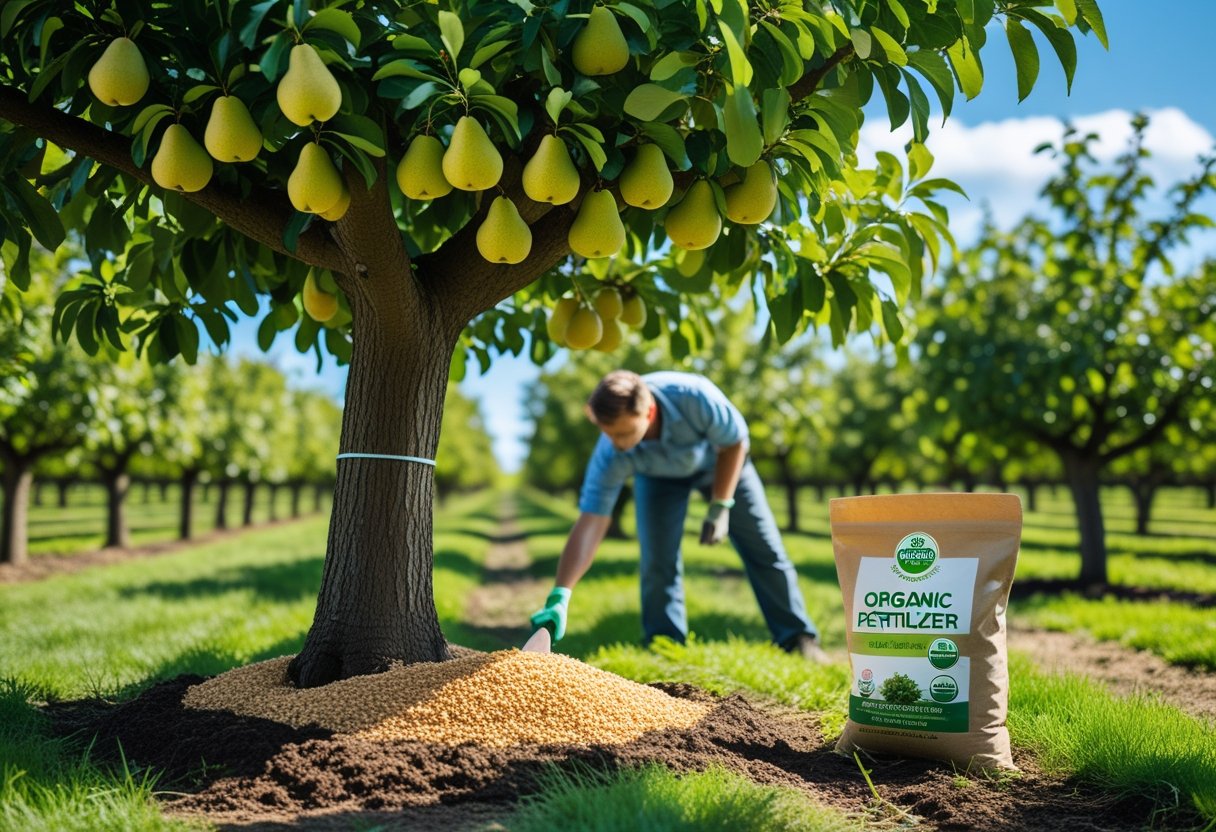
Your pear trees need specific nutrients at different growth stages to develop strong root systems, healthy foliage, and quality fruit. Pear trees thrive in fertile, well-draining soil with a pH between 6.0 and 7.0, making soil conditions just as important as fertilizer selection. Understanding these nutritional requirements helps you choose the right fertilizer type and application method.
This guide covers everything you need to know about fertilizing pear trees effectively, from understanding nutrient needs to proper application techniques. You’ll learn how to test your soil, select appropriate fertilizers, and create optimal growing conditions that support healthy tree development and maximize your harvest potential.
Understanding Pear Tree Nutritional Needs
Pear trees require specific nutrients to produce healthy fruit and maintain vigorous growth. Nitrogen, phosphorus, and potassium serve as the foundation for tree development, while micronutrients like iron support essential physiological processes.
Essential Nutrients for Pear Trees
Your pear tree depends on three primary macronutrients for optimal health and productivity. Each nutrient serves distinct functions that directly impact your tree’s growth and fruit quality.
Nitrogen drives vegetative growth in your pear trees. This nutrient promotes foliage growth and improves overall vigor, ensuring your tree develops strong branches and healthy leaves. Without adequate nitrogen, your tree will exhibit stunted growth and reduced fruit production.
Phosphorus supports root development and flowering processes. This nutrient aids in root development, flowering, and fruit set, making it crucial during your tree’s early establishment period. Proper phosphorus levels ensure strong root systems that can efficiently absorb water and nutrients.
Potassium enhances fruit quality and disease resistance. This nutrient enhances fruit quality, disease resistance, and overall tree health, helping your pear tree produce larger, sweeter fruits. Adequate potassium levels also strengthen your tree’s ability to withstand environmental stresses.
Related Posts:
- Best Fertilizer for Drift Roses: Top Choices for Healthiest Blooms
- Best Water Globes for Plants: Top Self-Watering Solutions for Indoor Gardeners
- Sloped Garden Design Ideas: Maximize Your Space with the Ultimate Style
The Role of Micronutrients in Tree Health
Micronutrients support critical biological functions in your pear trees despite being needed in smaller quantities. These trace elements work as catalysts in various metabolic processes that maintain tree health.
Iron prevents chlorosis and maintains healthy leaf color. Iron plays various roles in photosynthesis and enzyme activation, ensuring your pear tree can efficiently convert sunlight into energy. Iron deficiency commonly appears as yellowing leaves with green veins.
Zinc supports shoot development and fruit formation. This micronutrient helps regulate growth hormones and protein synthesis in your tree. Zinc deficiency results in shortened internodes and smaller leaves.
Manganese and boron contribute to cellular functions and fruit development. Manganese aids in chlorophyll formation, while boron supports cell wall development and pollen germination. Both nutrients are essential for proper fruit set and development in your pear trees.
Signs of Nutrient Deficiency in Pear Trees
Recognizing nutrient deficiency symptoms helps you address problems before they severely impact your tree’s health. Visual indicators typically appear in leaves and fruit first.
Nitrogen deficiency creates yellowing leaves and poor growth. Nitrogen deficiency causes stunted growth, yellowing leaves, and poor fruit production, starting with older leaves turning pale green to yellow. Your tree may also produce fewer flowers and smaller fruits.
Phosphorus deficiency results in purple or reddish leaf coloration. Phosphorus deficiency leads to poor root development, reduced flowering, and delayed fruit maturity, affecting your tree’s overall productivity. Leaves may appear darker than normal with purple undertones.
Potassium deficiency causes leaf edge browning and weak stems. Potassium deficiency results in weak stems, small fruit size, and increased susceptibility to diseases, compromising your tree’s structural integrity. Fruit quality declines with reduced sugar content and poor storage life.
Micronutrient deficiencies create specific visual patterns. Micronutrient deficiencies can cause chlorosis, leaf distortion, and reduced fruit quality, each presenting unique symptoms that help identify the specific deficiency affecting your pear tree.
Types of Fertilizers for Pear Trees
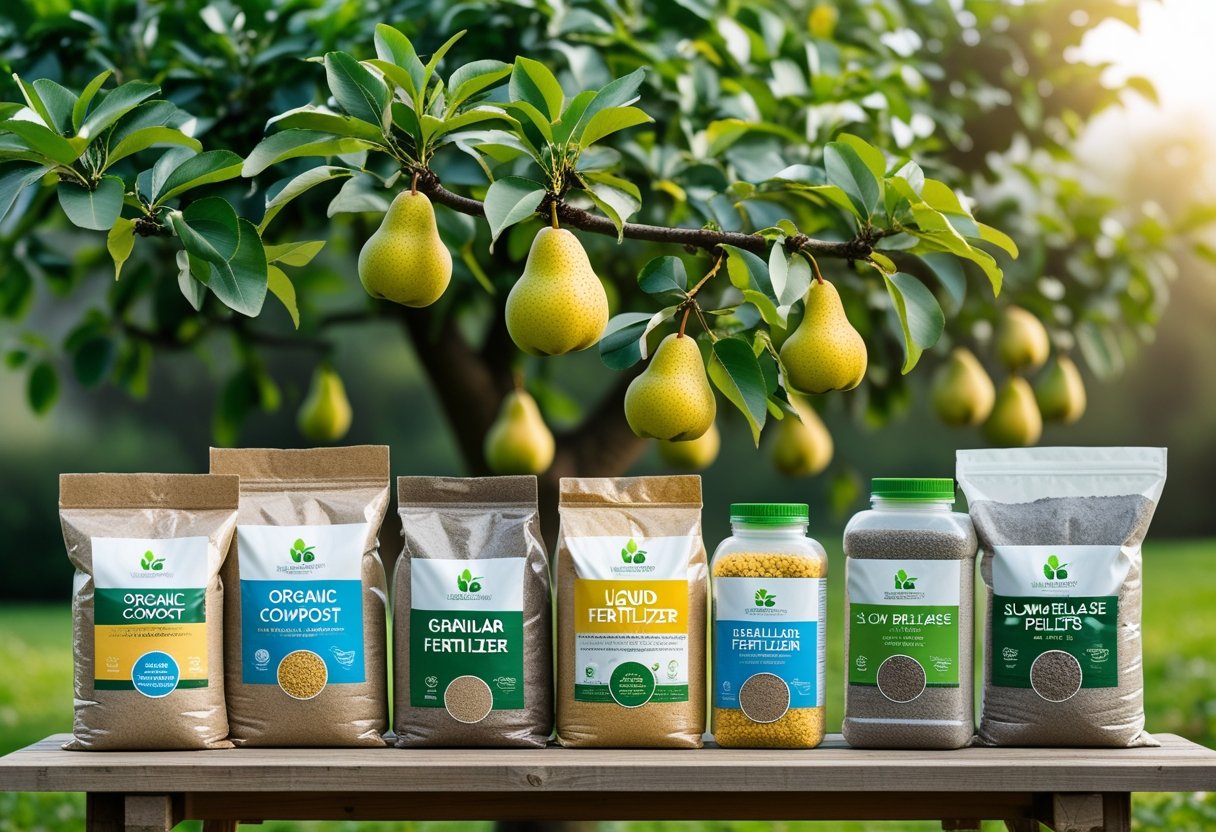
Pear trees thrive with both organic and synthetic fertilizer options, each offering distinct advantages for tree health and fruit production. The choice between compost-based organic fertilizers, quick-acting synthetic fertilizers, or specialized slow-release formulations depends on your soil conditions and gardening preferences.
Organic Fertilizers and Their Benefits
Organic fertilizers provide slow-release nutrients while improving soil structure and supporting beneficial microorganisms. These natural options create long-term soil health improvements that synthetic alternatives cannot match.
Compost serves as an excellent all-around organic fertilizer for pear trees. It delivers balanced nutrients gradually and enhances water retention in the soil.
Well-rotted manure provides nitrogen, phosphorus, and potassium naturally. You should ensure the manure is fully composted to prevent root burn.
Bone meal offers high phosphorus content, making it ideal for promoting root development and flower formation. Apply it during early spring for best results.
Blood meal delivers quick-release nitrogen for vigorous leaf growth. Use it sparingly as excessive nitrogen can reduce fruit production.
Seaweed extract contains trace minerals often missing from other fertilizers. It strengthens disease resistance and improves overall tree vigor.
These organic options improve soil texture and drainage over time. They also support earthworms and beneficial bacteria that enhance nutrient availability.
Synthetic Fertilizers: Pros and Cons
Synthetic fertilizers offer precise nutrient control and rapid results for pear trees. Balanced fertilizer formulations like 10-10-10 or 13-13-13 provide consistent NPK ratios that meet most pear tree requirements.
Advantages of synthetic fertilizers:
- Fast nutrient absorption by roots
- Precise nutrient ratios
- Cost-effective per application
- Easy storage and application
Disadvantages include:
- Risk of over-fertilization and root burn
- No soil structure improvement
- Potential groundwater contamination
- Short-term nutrient availability
Granular synthetic fertilizers release nutrients quickly after watering. You should follow package directions carefully to avoid damaging your trees.
Water-soluble synthetic options mix easily and provide immediate nutrient uptake. They work well for correcting specific deficiencies quickly.
Slow-Release and Liquid Fertilizer Options
Slow-release fertilizers combine the convenience of synthetic fertilizers with extended nutrient availability. These formulations reduce application frequency and minimize nutrient loss through leaching.
Coated granular fertilizers release nutrients over 3-6 months based on soil temperature and moisture. They provide consistent feeding throughout the growing season.
Liquid fertilizer offers immediate nutrient availability and easy root absorption. Apply liquid fertilizers every 2-4 weeks during active growth periods.
You can apply liquid fertilizers through soil drenching or foliar feeding. Soil application works best for root uptake, while foliar feeding addresses quick deficiency corrections.
Application timing matters significantly:
- Early spring: Slow-release granules
- Growing season: Liquid fertilizer supplements
- Late summer: Reduced nitrogen applications
Slow-release options reduce the risk of over-fertilization compared to quick-release alternatives. They maintain steady nutrient levels without dramatic spikes that can harm tree health.
Choosing the Best Fertilizer for Pear Trees
The right fertilizer selection depends on understanding proper nutrient ratios and matching products to your tree’s growth stage. NPK ratios like 10-10-10 or 5-10-10 work well for established trees, while young trees need different formulations.
Understanding the Ideal NPK Ratio
Look for fertilizers with NPK ratios like 6-2-4 or 5-4-6, as these provide balanced nutrition for pear trees. The first number represents nitrogen for leaf growth, phosphorus supports root development, and potassium enhances fruit quality.
Nitrogen promotes vigorous foliage and shoot development. Too much nitrogen can reduce fruit production and make trees more susceptible to disease.
Phosphorus encourages strong root systems and flower formation. This nutrient becomes especially important during the tree’s establishment phase.
Potassium improves fruit sweetness and disease resistance. It also helps trees withstand environmental stress and cold temperatures.
For mature producing trees, slightly higher nitrogen ratios work well. European pear varieties like Bartlett benefit from fertilizers with higher nitrogen content to support their vigorous growth habits.
Selecting the Right Fertilizer for Young Pear Trees
Young pear trees require different nutrition than established trees. Dwarf varieties need only one-quarter of the recommended rate for standard trees due to their smaller root systems.
Balanced formulations with equal NPK ratios like 10-10-10 work best for newly planted trees. These provide steady nutrition without overwhelming developing root systems.
Lower nitrogen levels prevent excessive vegetative growth that can delay fruit production. Young trees need time to establish strong root systems before focusing energy on fruit development.
Apply fertilizer in a circular pattern around the tree, staying 12 inches away from the trunk. This prevents root burn while ensuring nutrients reach the developing root zone.
Water thoroughly after application to help dissolve nutrients and move them into the root zone.
Top-Rated Commercial Fertilizer Brands
Several commercial brands offer specialized fruit tree fertilizers with appropriate NPK ratios. Jobe’s Organics Fruit & Citrus Fertilizer provides slow-release nutrition with beneficial microorganisms.
Espoma Citrus-tone works well for pear trees despite its name, offering a 5-2-6 NPK ratio. This organic blend includes calcium and other micronutrients essential for fruit development.
Miracle-Gro Fruit & Citrus Plant Food Spikes offer convenient application with a 15-5-10 ratio. These spikes release nutrients slowly over several months.
Dr. Earth Premium Gold Fruit Tree Fertilizer contains probiotics and mycorrhizae to improve soil health. The 7-4-2 ratio supports both growth and fruit production.
Choose organic options for long-term soil improvement or synthetic fertilizers for quick nutrient availability. Both organic and chemical fertilizers offer distinct benefits depending on your gardening goals and timeline.
Soil Testing and Preparation
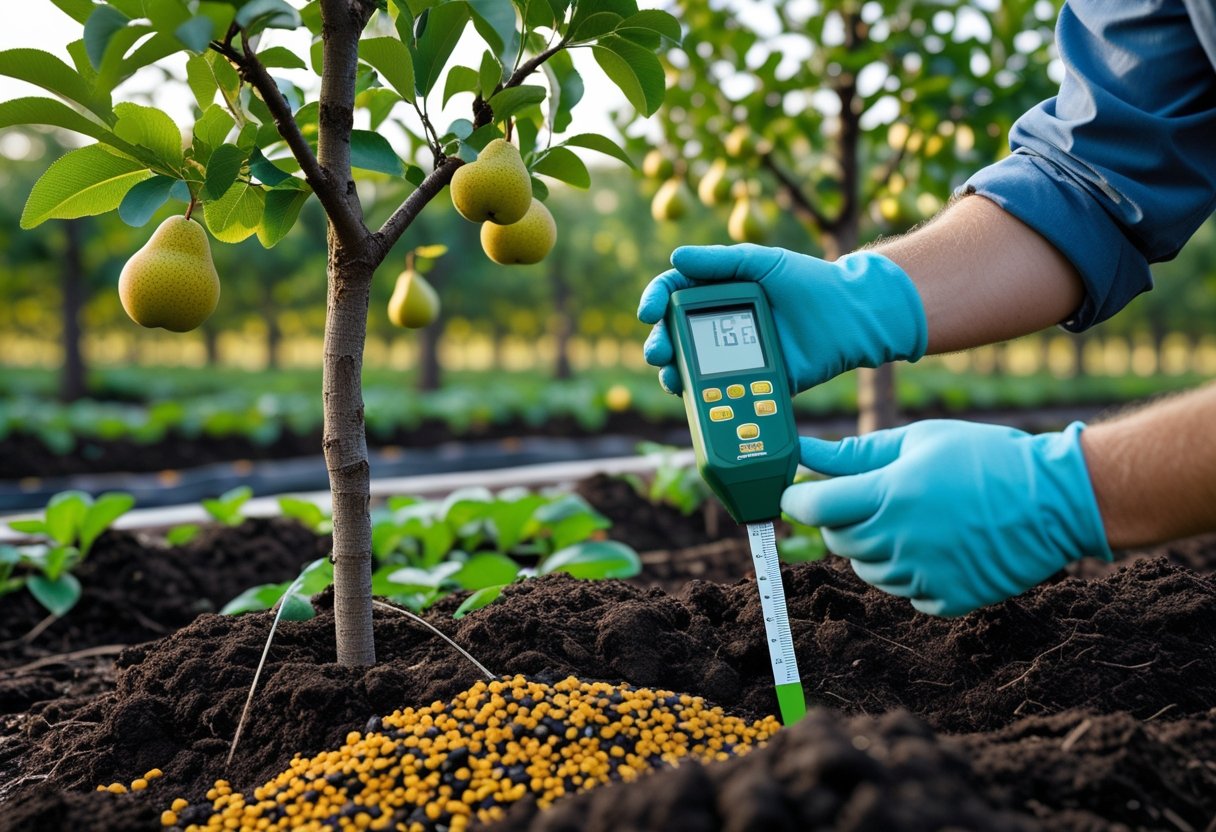
Proper soil analysis reveals nutrient deficiencies and pH imbalances that affect pear tree health. Soil preparation before planting significantly improves tree performance and establishes optimal growing conditions for fertilizer effectiveness.
How to Conduct Soil Testing for Pear Trees
Testing your soil determines if it meets pear tree requirements and identifies specific fertilizer needs. Begin collecting samples 2-3 months before planting or fertilizing to allow time for amendments.
Collect soil from 8-10 locations around the planting area at depths of 6-8 inches. Remove grass, leaves, and debris from each sampling spot. Mix all samples thoroughly in a clean bucket to create one composite sample.
Professional Testing Options:
- University extension offices
- Private soil laboratories
- Agricultural testing facilities
Local university extension offices provide comprehensive soil testing services with detailed sampling instructions. Send 1-2 cups of your composite sample in a clean container.
Test results reveal nutrient concentrations, pH levels, and organic matter content. Most reports include specific recommendations for lime and fertilizer applications based on your soil conditions.
Adjusting Soil pH and Texture
Pear trees thrive in slightly acidic soil with pH between 6.0 and 7.0. Soils outside this range limit nutrient availability even when fertilizers are present.
pH Adjustment Methods:
| Soil Condition | Amendment | Application Rate |
|---|---|---|
| Too Acidic (below 6.0) | Agricultural lime | 2-4 lbs per 100 sq ft |
| Too Alkaline (above 7.0) | Sulfur or organic matter | 1-2 lbs per 100 sq ft |
Apply lime in fall for spring planting since it takes 3-6 months to alter soil pH effectively. Sulfur works faster but still requires 2-3 months for full effect.
Heavy clay soils benefit from organic matter additions to improve drainage and root penetration. Sandy soils need organic amendments to increase water and nutrient retention.
Add 2-4 inches of compost or well-rotted manure to improve soil texture regardless of type.
Importance of Soil Preparation Before Fertilizing
Applying and incorporating nutrients before planting establishes ideal growing conditions from the start. Well-prepared soil maximizes fertilizer effectiveness and reduces future amendment needs.
Proper preparation prevents fertilizer waste through improved nutrient retention. Organic matter increases the soil’s ability to hold both water and nutrients where roots can access them.
Essential Pre-Planting Steps:
- Incorporate lime or sulfur based on pH needs
- Add 25-50 pounds of organic fertilizer per 1,000 square feet
- Work in 2-4 inches of compost or aged manure
- Ensure drainage is adequate to prevent root rot
Till amendments 8-12 inches deep across the entire planting area rather than just individual holes. This creates uniform growing conditions and encourages proper root development.
Well-prepared soil reduces transplant shock and establishes stronger root systems. Trees with extensive, healthy roots utilize fertilizers more efficiently throughout their productive years.
Effective Fertilizer Application Techniques
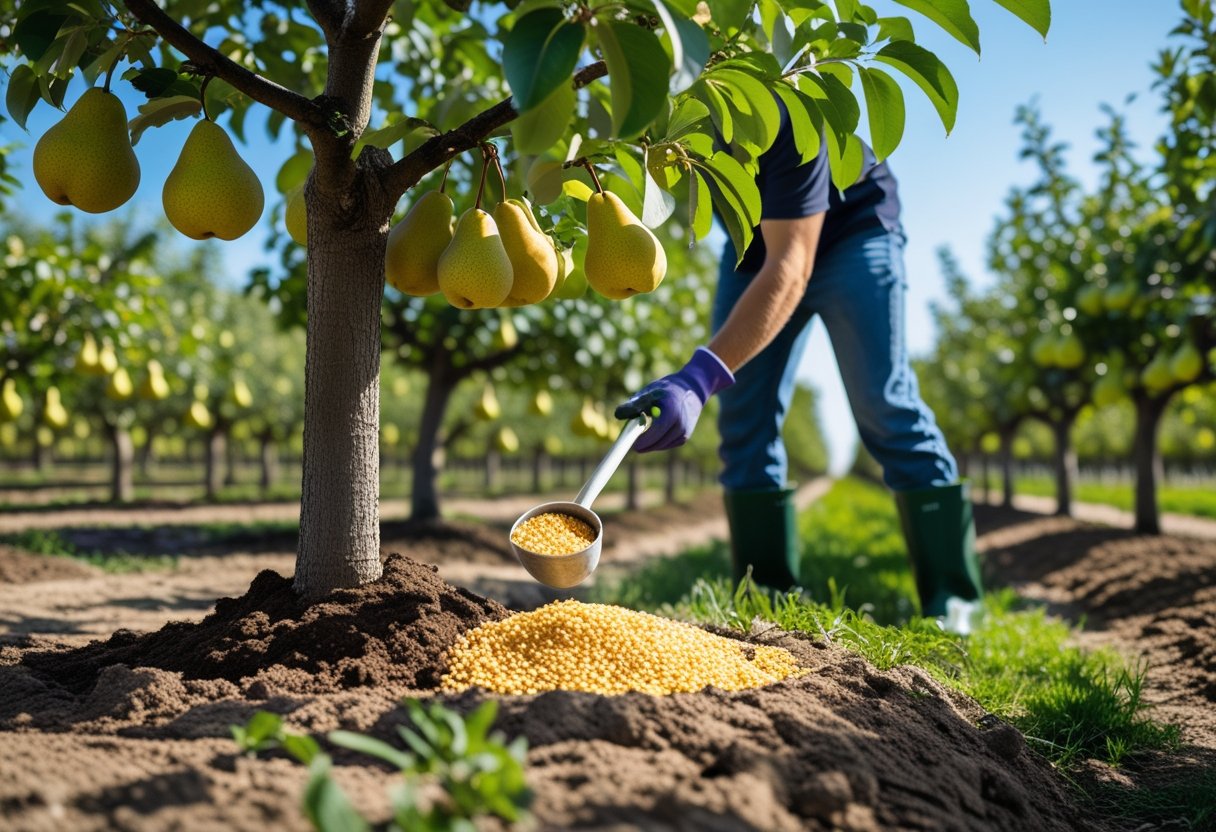
Proper timing and application methods determine whether your pear tree receives maximum benefit from fertilization. The key is applying fertilizer at the right times while avoiding common mistakes that can damage your tree.
When and How Often to Fertilize
Spring fertilization provides the most critical feeding for pear trees. Apply fertilizer in early spring before buds break, typically in March or April depending on your climate zone.
This timing allows trees to access nutrients during their active growth phase. Fall fertilization about six weeks before the first frost helps prepare trees for winter dormancy.
Frequency guidelines:
- Young trees (1-3 years): Fertilize twice yearly
- Mature trees (4+ years): Once yearly in spring is sufficient
- Poor soil conditions: May require additional feeding
Avoid fertilizing in late summer as this encourages new growth vulnerable to frost damage. Skip fertilization if your tree shows excessive vegetative growth or if recent soil tests indicate adequate nutrient levels.
Correct Application Methods for Optimal Results
Soil application delivers nutrients directly to the root system for long-term feeding. Spread fertilizer in a circular pattern from the trunk to the drip line where feeder roots are most active.
Apply fertilizer 6 inches from the trunk base. This prevents root burn while ensuring nutrients reach the feeding zone.
Application amounts:
- Use 1-2 pounds per 100 square feet for granular fertilizer
- Apply 0.5-1 pound per inch of trunk diameter for established trees
Water thoroughly after application to help nutrients penetrate soil and reach roots. Foliar feeding provides quick nutrient absorption through leaves for addressing specific deficiencies.
Mix liquid fertilizer according to package directions. Spray early morning or late afternoon to prevent leaf burn.
Avoiding Over-Fertilization and Common Mistakes
Over-fertilization symptoms include excessive leaf growth, delayed fruit production, and increased susceptibility to pests and diseases. Too much nitrogen creates lush foliage at the expense of fruit development.
Avoid applying fertilizer in late summer or fall as this stimulates growth vulnerable to frost damage.
Common application errors:
- Placing fertilizer directly against the trunk
- Using too much fertilizer too frequently
- Neglecting to water after application
- Fertilizing during drought stress
Test soil every 2-3 years to monitor nutrient levels. This prevents unnecessary fertilization and helps identify specific deficiencies requiring targeted treatment.
Follow package directions carefully and adjust amounts based on tree size and soil conditions rather than assuming more is better.
Supporting Factors for Healthy Pear Trees
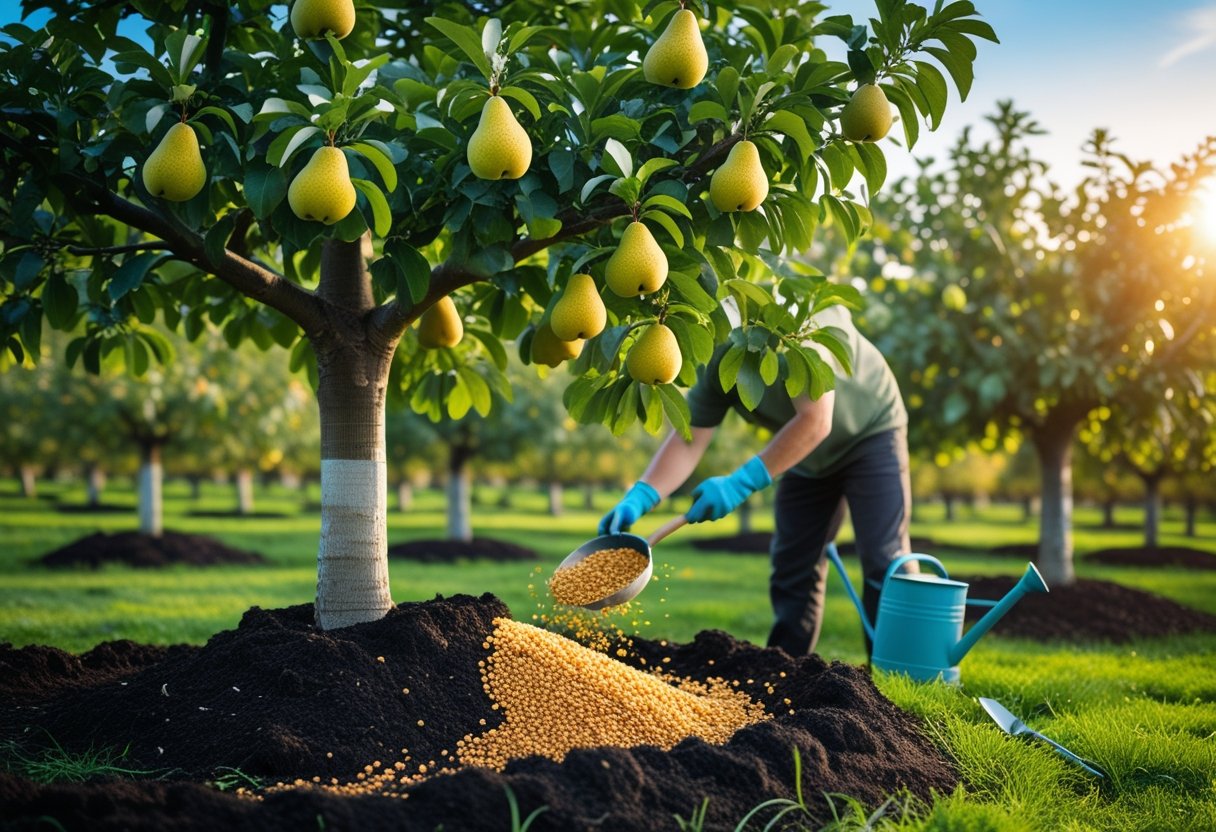
Proper pruning enhances nutrient uptake and promotes stronger fruit development. Disease resistance improves when trees receive balanced nutrition combined with adequate watering and mulching practices.
Pruning and Its Impact on Fertilization
Pruning directly affects how your pear trees utilize fertilizer by improving nutrient distribution throughout the canopy. When you remove dead, diseased, or overcrowded branches, the remaining healthy wood receives more concentrated nutrition.
Optimal pruning timing occurs during late winter before fertilization begins. This allows nutrients to flow directly to productive branches rather than waste energy on unnecessary growth.
Thinning cuts improve air circulation and sunlight penetration. These conditions help your tree process nutrients more efficiently and reduce fungal diseases that can interfere with nutrient absorption.
Remove water sprouts and suckers immediately after fertilizing. These vigorous shoots consume excessive nitrogen that should support fruit-bearing branches instead.
Annual pruning benefits include:
- Enhanced fertilizer uptake in remaining branches
- Improved fruit size and quality
- Reduced competition for nutrients
- Better spray coverage for disease prevention
Encouraging Fruit Production and Disease Resistance
Strategic fertilization timing directly influences both fruit production and your tree’s natural disease resistance. Balanced NPK fertilizers support strong cell walls that resist pathogen penetration.
Phosphorus application during early spring promotes robust flower development. Higher flower counts typically result in increased pear fruit production when pollination conditions are favorable.
Potassium strengthens cell structure and improves your tree’s ability to withstand bacterial infections like fire blight. Apply potassium-rich fertilizers in late summer to prepare trees for winter stress.
Key nutrients for disease resistance:
| Nutrient | Function | Application Rate |
|---|---|---|
| Potassium | Cell wall strength | 1-2 lbs per mature tree |
| Calcium | Disease prevention | 0.5 lbs per mature tree |
| Magnesium | Chlorophyll production | 0.25 lbs per mature tree |
Avoid excessive nitrogen during late season. High nitrogen levels create tender growth that becomes vulnerable to disease organisms and reduces winter hardiness.
Related Posts:
- Vintage Garden Ideas: Enhancing Your Outdoor Space with Timeless Charm
- How to Grow More in a Small Space Garden: Tips and Tricks
- Choosing the Best Liquid Fertilizer: Which Fertilizers Should You Use
Watering, Mulching, and Additional Care Tips
Consistent moisture levels help your pear trees absorb fertilizer nutrients effectively. Deep watering twice weekly moves dissolved nutrients into the root zone better than frequent shallow irrigation.
Apply 2-3 inches of organic mulch around the base, extending to the drip line. Mulch retains soil moisture and prevents fertilizer from washing away during heavy rainfall.
Effective mulching materials:
- Shredded bark
- Wood chips
- Compost
- Straw
Keep mulch 6 inches away from the trunk to prevent rodent damage and fungal issues. Refresh mulch annually before applying granular fertilizers.
Soil pH maintenance between 6.0-7.0 optimizes nutrient availability. Test soil pH annually and adjust with lime or sulfur as needed before fertilizing.
Monitor for pest damage that can interfere with nutrient transport. Aphids and scale insects reduce your tree’s ability to utilize applied fertilizers by damaging conducting tissues.
Frequently Asked Questions
Pear tree fertilization involves specific nutrient ratios, timing schedules, and product selections that differ from other fruit trees. Understanding these requirements helps maximize both tree health and fruit production.
What are the optimal NPK ratios for pear tree growth and fruiting?
Young pear trees benefit from a balanced 10-10-10 NPK ratio to establish strong root systems and branch development. This equal distribution of nitrogen, phosphorus, and potassium supports overall tree structure.
Mature fruiting trees perform better with lower nitrogen ratios like 5-10-10 or 8-10-10. Higher phosphorus and potassium levels promote flower formation and fruit quality.
Trees showing excessive vegetative growth should receive fertilizers with nitrogen ratios below 8%. This prevents soft growth that attracts pests and reduces cold hardiness.
How often should I fertilize my pear trees for best results?
Apply fertilizer once per year in early spring before bud break for most pear trees. This timing coincides with the tree’s active nutrient uptake period.
Mature trees producing heavy crops may benefit from a second light application in late spring. This supplemental feeding supports fruit development without encouraging late-season growth.
Avoid fertilizing late in the growing season as this stimulates tender growth vulnerable to frost damage. Stop all fertilizer applications by mid-summer.
What natural fertilizer options are effective for pear trees?
Compost provides slow-release nutrients and improves soil structure around pear trees. Apply a 2-3 inch layer around the base each spring, keeping it away from the trunk.
Well-aged manure offers balanced nutrition with organic matter benefits. Chicken manure works particularly well due to its higher nitrogen content for young trees.
Bone meal supplies phosphorus for root development and flower formation. Fish emulsion delivers quick-acting nitrogen during the growing season when diluted properly.
Can the same fertilizer be used for apple and pear trees?
Apple and pear trees have similar nutritional requirements, making most fertilizers interchangeable between the two species. Both prefer balanced ratios during establishment and lower nitrogen formulations at maturity.
The timing and application rates remain consistent for both tree types. Spring applications before bud break work effectively for apples and pears alike.
Consider specific variety needs rather than species differences when selecting fertilizers. Some cultivars may require adjusted feeding schedules based on their vigor and fruiting habits.
Are fertilizer spikes recommended for feeding pear trees?
Fertilizer spikes provide convenient application but create concentrated nutrient pockets that may burn roots. The uneven distribution limits their effectiveness compared to broadcast applications.
Granular fertilizers spread evenly around the drip line deliver nutrients more uniformly to the entire root system. This method reduces the risk of root damage from concentrated salts.
Liquid fertilizers offer the most even distribution and immediate availability to tree roots. They work especially well for container-grown or newly planted pear trees.
What considerations should be taken when fertilizing flowering pear varieties?
Ornamental flowering pears require less nitrogen than fruiting varieties to prevent excessive foliage growth. Use fertilizers with ratios like 5-10-5 or similar low-nitrogen formulations.
These decorative trees benefit more from phosphorus to enhance flower production and display quality. Avoid high-nitrogen fertilizers that reduce blooming in favor of leaf growth.
Soil pH between 6.0-7.0 remains important for flowering pears to absorb nutrients effectively. Test soil conditions before fertilizing to ensure optimal uptake.